Adaptation Fund a. Monetization of CERs
The Adaptation Fund completed its two first sales of certified emission reductions (CERs). The first sale occurred during the third week of May 2009. 600,000 tons of CERs were sold at an average price of €12.17 per ton, totalling € 7.3 million. The second sale, which occurred during the second week of June 2009, comprised of 500,000 tons of CERs sold at an average price of € 11.46 per ton, totalling € 5.7 million. Barclays Capital was appointed as the dealer for the first sale and Bank of America Merrill Lynch for the second sale. The two sales raised a total amount of € 13 million (equivalent to US$ 18.4 millioni). The end buyers of the CERs were widely diversified across sectors and regions and included corporate carbon off-setters as well as entities complying with the European Union Emissions Trading Scheme (EU ETS). The Adaptation Fund, which is financed by a 2% levy on CDM proceeds, may offer some lessons on the effectiveness of carbon market levies as a method for generating revenue. Different projections have been made as to the amount of revenue the Adaptation Fund is likely to receive in the first Kyoto commitment period (2008-2012). According to the UNFCCC, World Bank and UNDP, the total proceeds from the 2% levy on CERs would be between US$ 80-300 million, US$ 100-500 million, and US$ 160-950 million per year, respectivelyii. These figures vary based on price and volume assumptions (for example, the UNFCCC figure assumes 2% of total annual sales of 300-450 million CERs and a market price of US$ 24iii). Given the price range of € 11-12 at which the CERs were recently sold, it is clear that the price is below what was originally projected (US$ 24 or €17i). In terms of volume, since the beginning of the CDM trading scheme (starting January 2008) up to August 2009, 316 million CERs have been sold (a 20 month period in total) compared to the UNFCCC’s estimate of 300-450 million annually. The Adaptation Fund’s 2% share of these 316 million equals 6.32 million CERs. Therefore, in these first two sales, the Adaptation Fund has sold 17.4% of the CERs in its possession. If the fund sells the remaining CERs for the same average price, it will raise approximately € 74.7 million (US$ 105.8 millioni) for the 20 month period, which is the equivalent to € 44.8 million (US$ 63.5 millioni) per year. This implies that both the volume and the price of CERs are below original UNFCCC projections, indicating that the overall revenue of the Adaptation Fund is likely to be lower than the UNFCCC’s projected range of US$ 80-300 million.
i. At the currency exchange rate of 11 August 2009: 1 EUR = 1.41685 US$
ii. Müller, B. (2008) International Adaptation Finance: The Need for an Innovative and Strategic Approach. EV 42. Oxford: Oxford Institute for Energy Studies.
iii. UNFCCC, (2007) Investment and financial flows relevant to the development of an effective and appropriate international response to Climate Change. Bonn. b. Sixth Adaptation Fund Board Meeting Outcomes
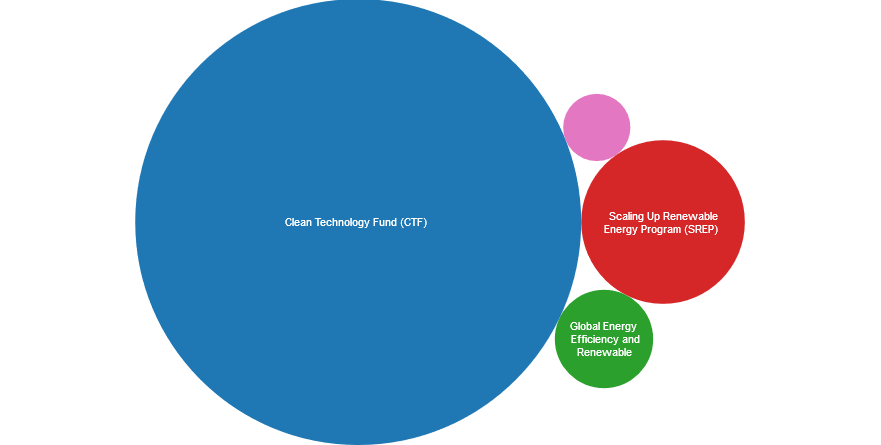
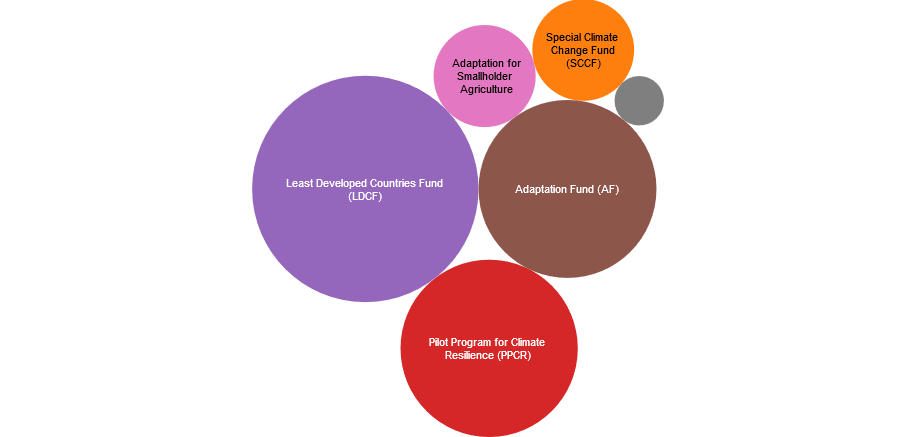
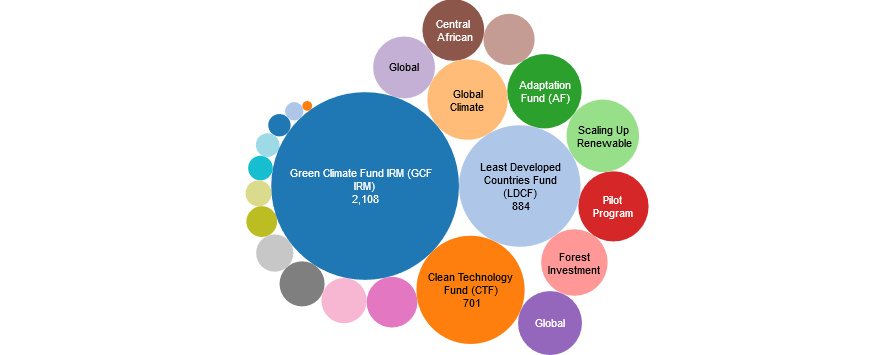
The Adaptation Fund Board met for the Sixth time in Bonn, on June 15 to 17, 2009. The Board made considerable progress in evolving an institutional mechanism which would allow countries to directly access resources from the Adaptation Fund. The Board expects the complete Operational Guidelines to be adopted at the next meeting, which will be held in Bonn on September 14 to 16, 2009. The Board heard presentations by the two countries which have put forward offers to confer legal capacity and to host the Adaptation Fund Board; Germany and Barbados. A decision is expected to be taken at the next Board meeting for endorsement by the Kyoto Protocol Parties in Copenhagen. For more information visit http://www.adaptation-fund.org/pressreleases.html GEF Least Developed Countries Fund (LDCF) and Special Climate Change Fund (SCCF)The LDCF/SCCF Council held its sixth meeting on June 24, 2009, and published the meeting documents at http://www.gefweb.org/interior.aspx?id=25480. The pledged contributions to the LDCF decreased US$ eq. 5.96 million (from US$ eq. 182.43 million as of October 2008 to US$ eq. 176.47 million as of May 2009). For full details on pledged and deposited amounts, visit the LDCF page.The pledged contributions to the SCCF increased US$ eq. 14.49 million (from US$ eq. 106.57 million as of October 2008 to US$ eq. 121.07 million as of May 2009). For full details on pledged and deposited amounts, visit the SCCF page. Climate Investment Funds (CIFs)The CIF meetings were held in May 2009, with an SREP consultation meeting in Paris on April 29. The main outcomes were: a. ODA issue clarified Since CIF is a pooled multi-donor trust fund managed by the World Bank, an international development institution recognized as such by the DAC for the purpose of ODA eligibility, these contributions can be scored as multilateral ODA. The outgoing use of all CIF resources as concessional loans, grants, and guarantees through the MDBs can be reported by each MDB as ODA if: (a) it meets the criterion of promoting economic development and welfare; b) the grant element is at least 25 percent; and c) funds are to be used in a country included in DAC list of ODA eligible countries. b. Clean Technology Fund As reported at the CTF meeting in May, the Fund has moved into implementation phase. The investment plans for Turkey, Egypt and Mexico have been signed and endorsed, and one project has been approved. Further joint missions are underway.
The house has appropriated: - CTF - $225 million - SCF - $75 million The Senate has appropriated: - CTF - $400 million - SCF - $75 million The differences will be reconciled later this year, and until then amounts to be directed toward the CIF will remain somewhat unclear. Given this lack of clarity, the US pledge is maintained at $2 billion, as this is what is reported by the CTF Trustees.
c. Pledge/funding status of the SCF programs
d. Pilot Programme for Climate Resilience
UN-REDD Programmea. Pledged funds
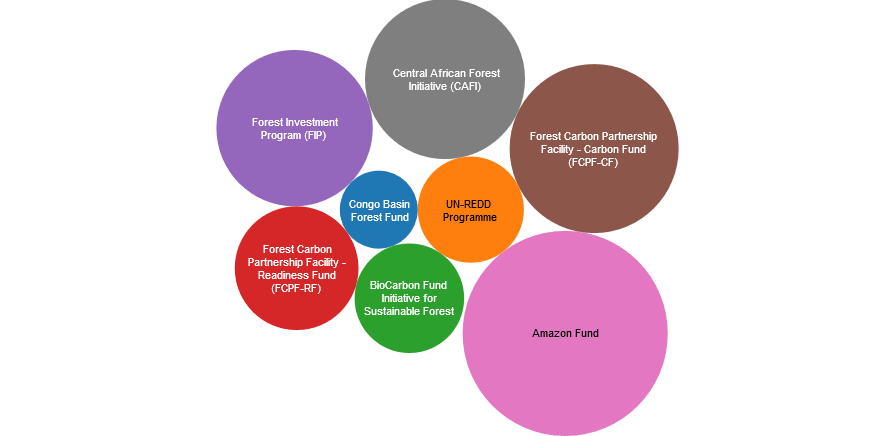
The amount committed by Norway to the UN-REDD Programme has risen from USD 35 million to USD 52 million. In addition, at the UN-REDD Programme second policy board meeting, held on 14 and 15 June 2009, the Government of Denmark announced that it was exploring the possibility of also funding the UN-REDD. b. Approved Projects
The UN REDD programme has recently approved its first 6 projects. The recipient countries are Democratic Republic of Congo (US$ 1.9 mi), Indonesia (US$ 5.6 mi), Papua New Guinea (US$ 2.6 mi), Tanzania (US$ 4.3 mi), Vietnam (US$ 4.4 mi) and International (US$ 9.6 mi). The total amount approved is US$ 28.3 mi. For more information, visit http://www.un-redd.org/ and http://www.undp.org/mdtf/UN-REDD/overview.shtml
|