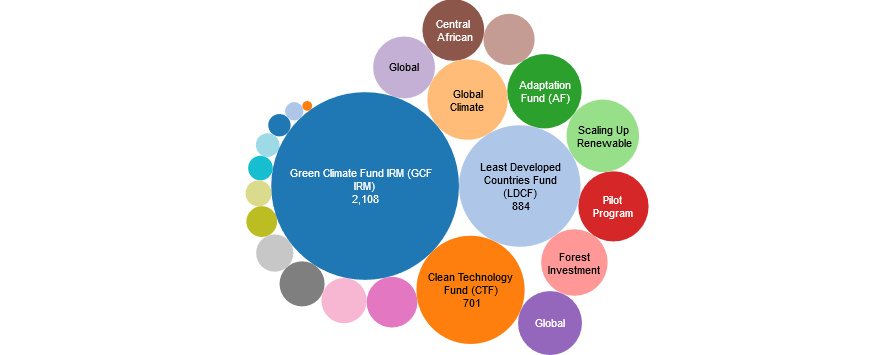
![]() The Conference of the Parties to the UNFCCC is the largest event of the year for those working on climate change. This year attention turns to Qatar, the host of the 18th of these major conferences. Once again, the hot topic will be how to finance developing-country efforts to respond to climate change. 2013 marks the end of the 'Fast-Start Finance (FSF)' period, during which developed countries committed to deliver $30 billion of ‘new and additional’ finance to help countries take immediate action on mitigation and adaptation. There will be much discussion on how this finance has been used, and how to mobilize more finance, in Doha. To inform this debate, we highlight the ten most noteworthy insights from our efforts over the past year to monitor climate finance on Climate Funds Update (CFU).![]() 1. Countries are committing agreed Fast Start Finance (or at least they say they are)Governments promised to find $30 billion of Fast Start Finance (FSF). They report providing more than $30 billion between 2010 and 2012. By August, countries self-reported a total of $23.7 billion. In the lead up to COP 18 some observers noted that this sum fell short of the original target. Last week, however, the US reported spending an additional $2.3 billion in 2012. This week, the UK reported $1.2 billion (£700 million) over the past year. Japan’s most recent presentation on its FSF contribution suggests that it has provided $13.8 billion in public finance. This finance has been channelled dedicated climate funds that we monitor on Climate Funds Update, through bilateral aid agencies, and through export credit and development finance agencies. Although reported climate finance has increased significantly since the start of the FSF period, it is not clear that all of this finance is ‘new and additional’. More than $2.1 billion in was deposited in dedicated climate funds, in support of prior pledges of finance for dedicated multilateral climate funds. However, current economic challenges have a grave impact on the ability of countries to scale up climate finance.![]() |